

The trigger
In early 2026, my co-founder Melisa and I were managing Instagram content for Tribu Yoga. Every planning session followed the same rhythm: revisiting the brand voice, redefining the audience, debating positioning angles, and refining posts through nearly identical rounds of edits.
Eventually it got hard to ignore what was actually going on. The work felt creative on the surface, but underneath it ran on a fixed structure — the same decisions, the same frameworks, the same kinds of posts, every time. We were really just running a system we'd never bothered to write down.
Two months after applying that structure consistently to Tribu Yoga's content, the account gained 5,000 new followers. Reaching the first 10,000 had taken years.
That result is what pushed us to actually start building Content Seed.
The audience
Content Seed is built for people who already know what they want to communicate but don't have the time to turn ideas into polished content. Founders, operators, agencies, copywriters, and social media managers all face the same problem: content is necessary, but it isn't their primary job.
The real bottleneck is usually execution, not creativity. There's a gap between "I know what I want to say" and "here's a finished, on-brand article ready to publish."
That gap costs hours every week, and most generic AI tools don't actually solve it — they just hand back fragments. The user still has to structure the strategy, shape the messaging, and turn it all into something publishable.
What it does
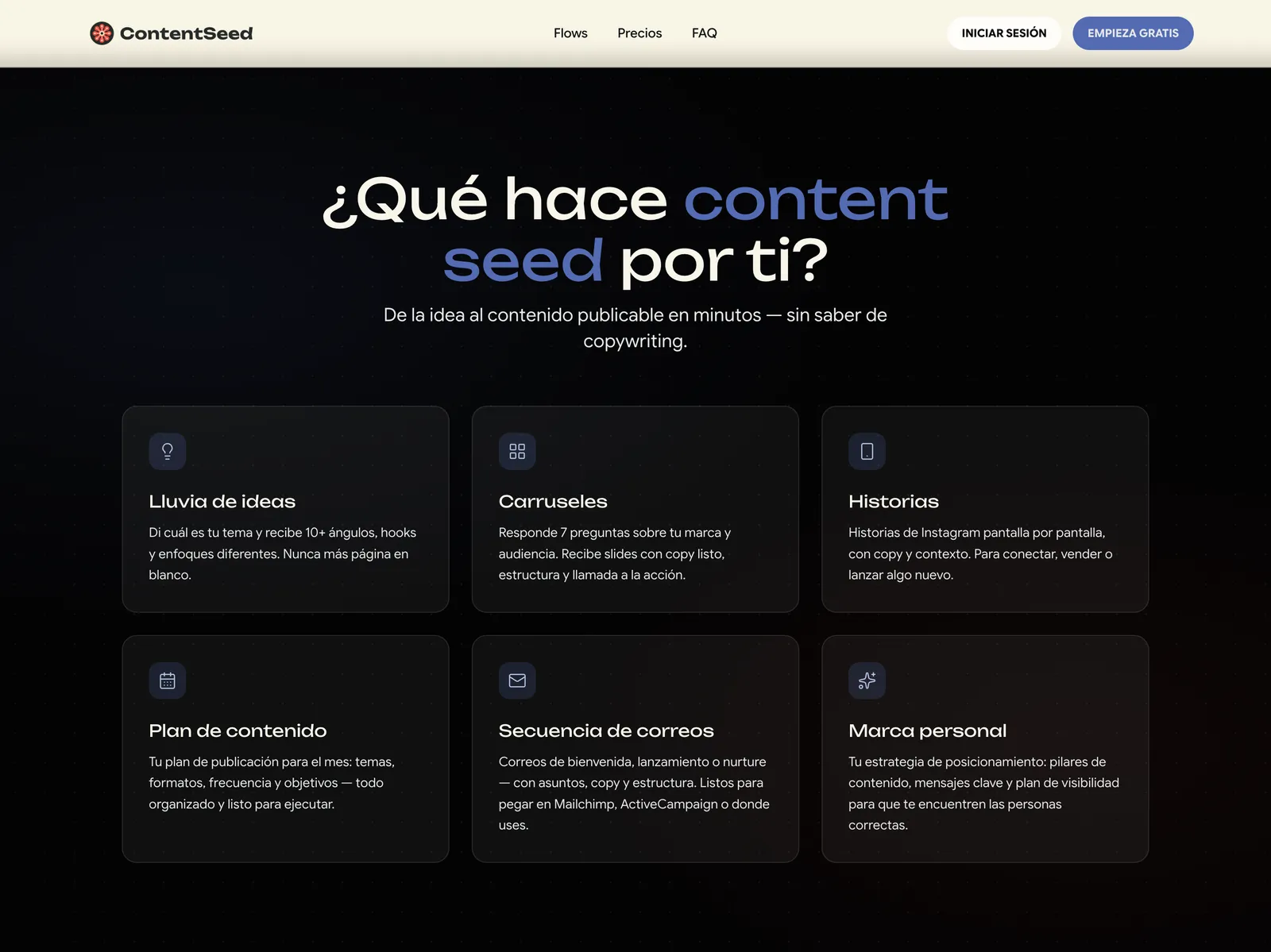
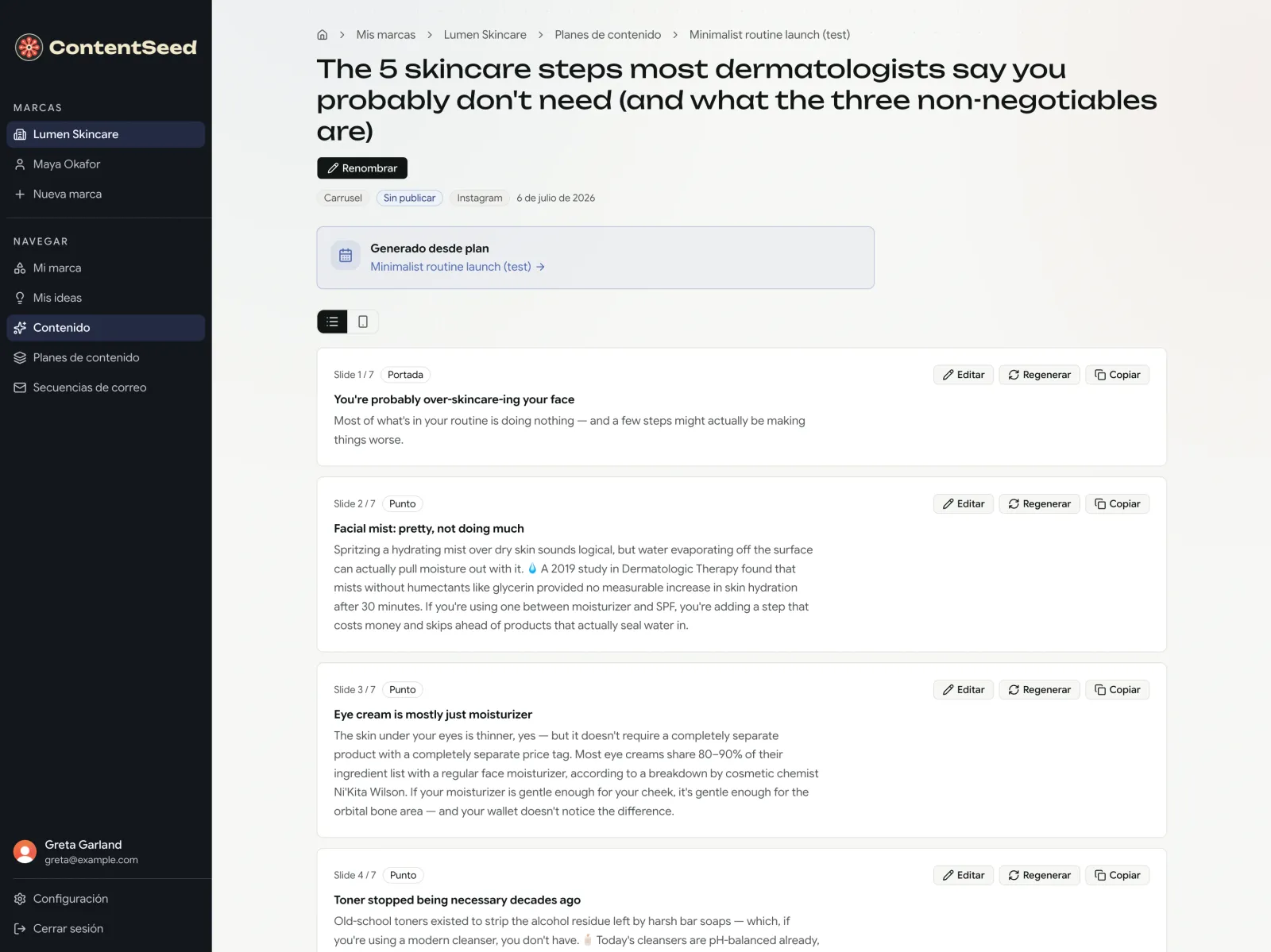
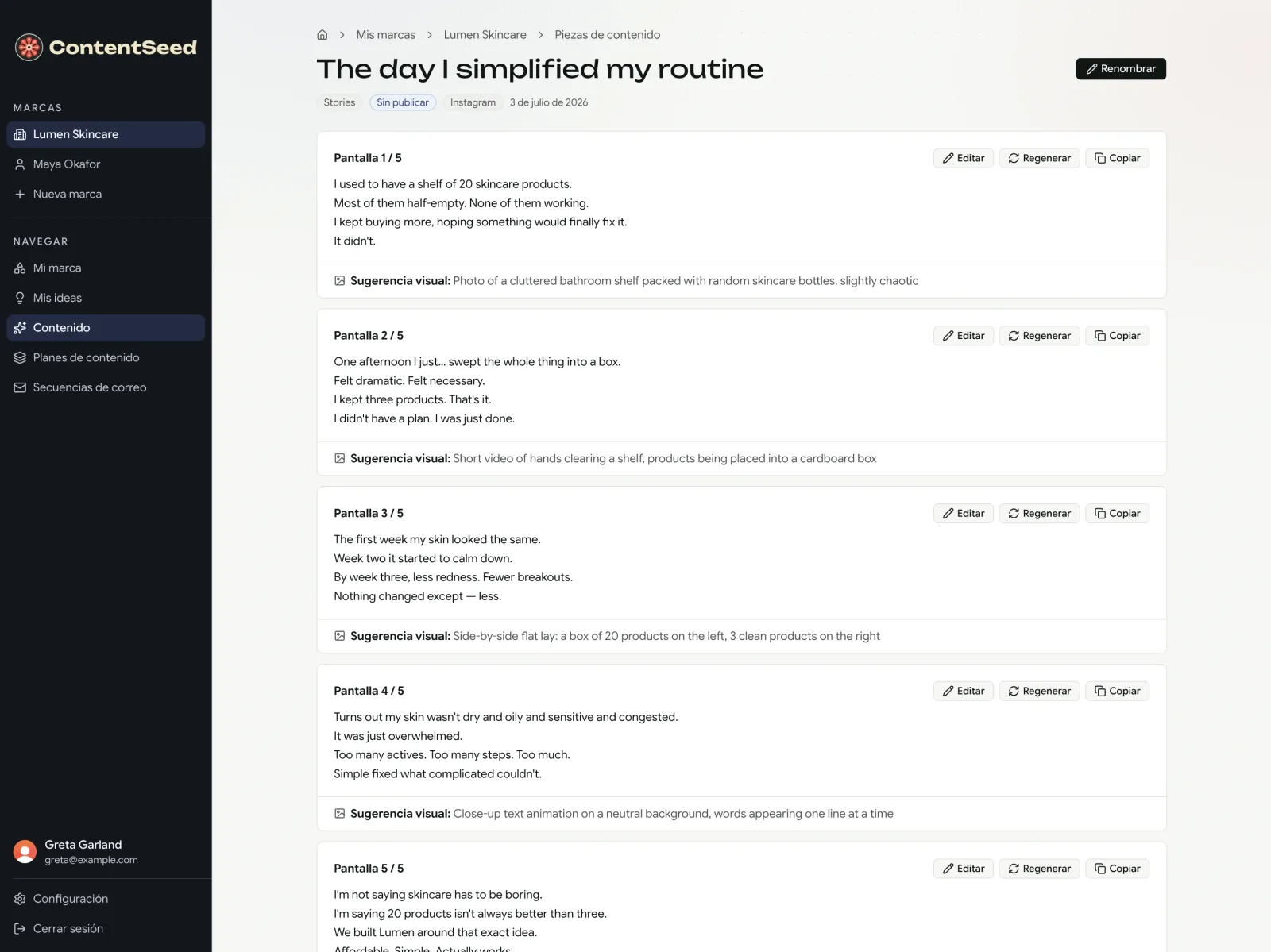
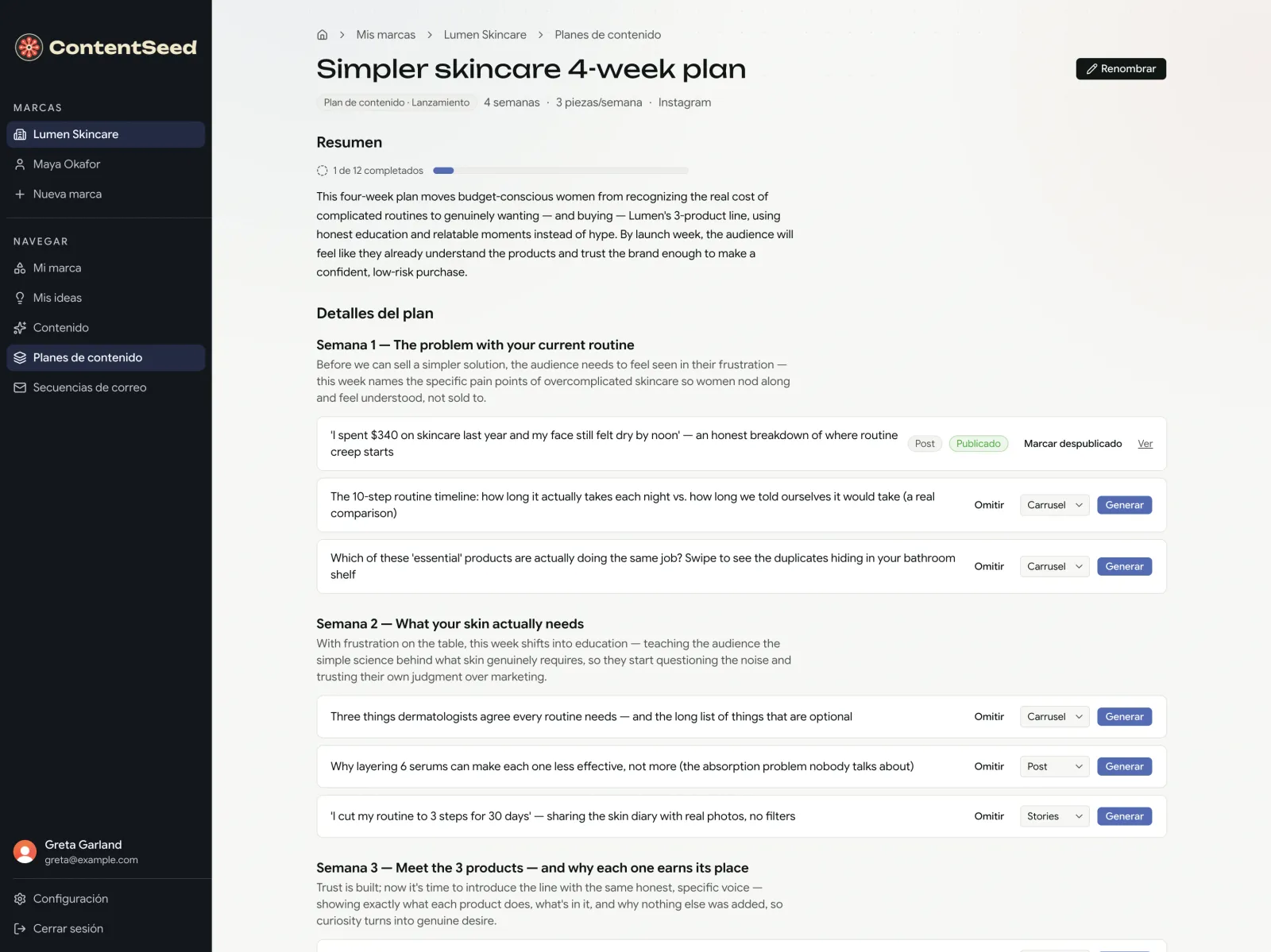
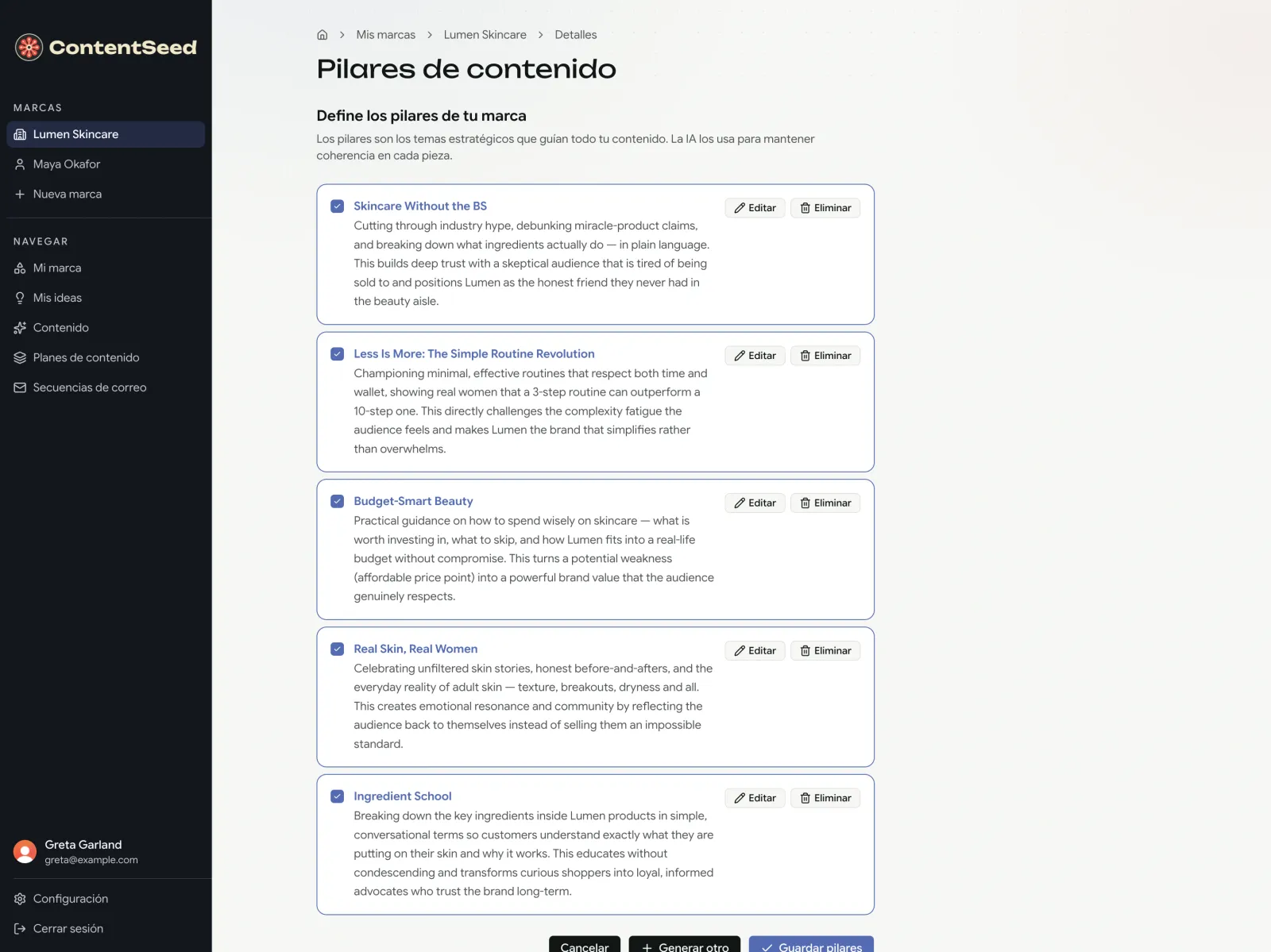
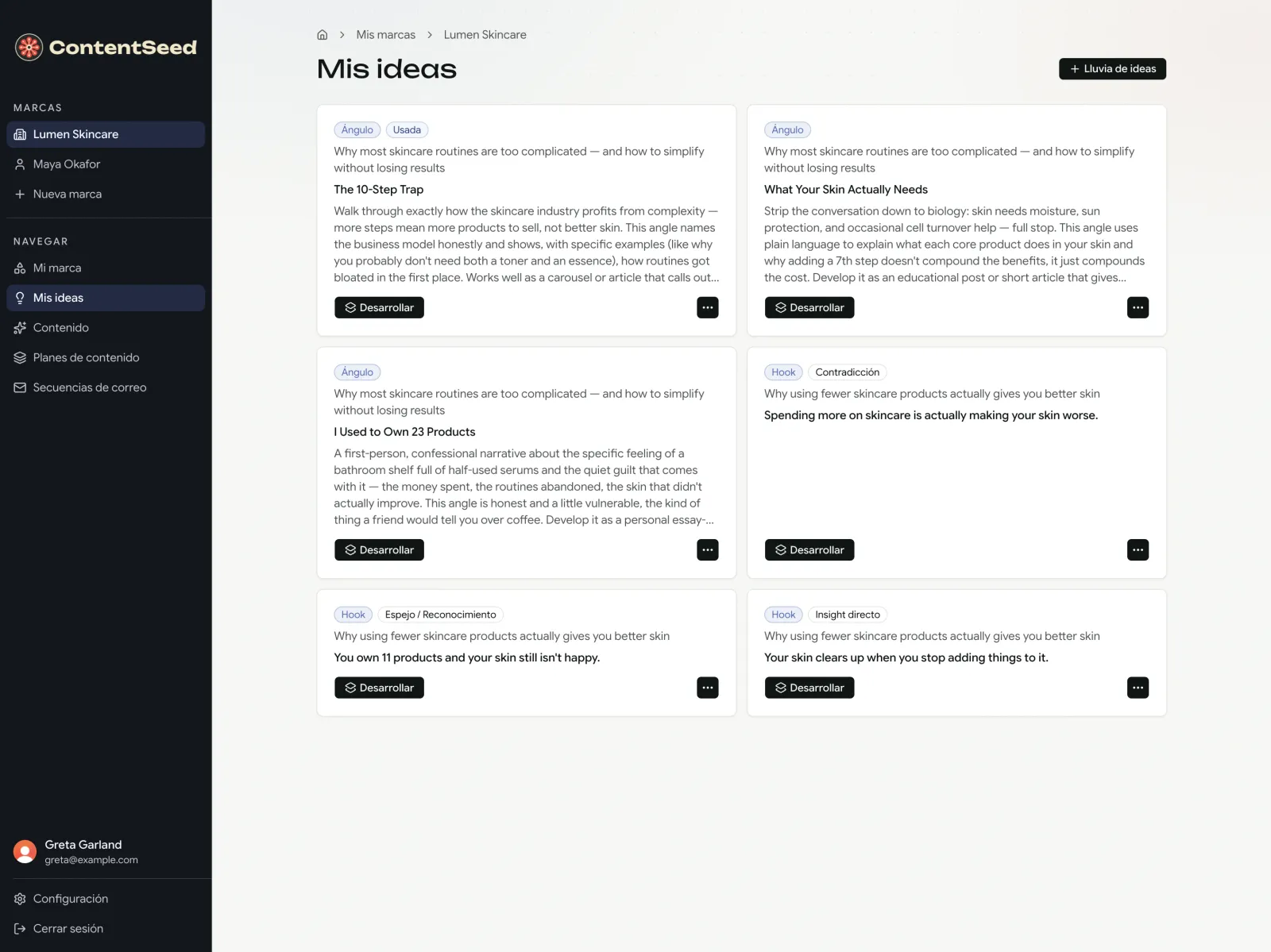
Content Seed runs structured workflows around the formats creators and brands actually publish: carousels, story sequences, email campaigns, monthly content plans, brand pillars, and idea generation.
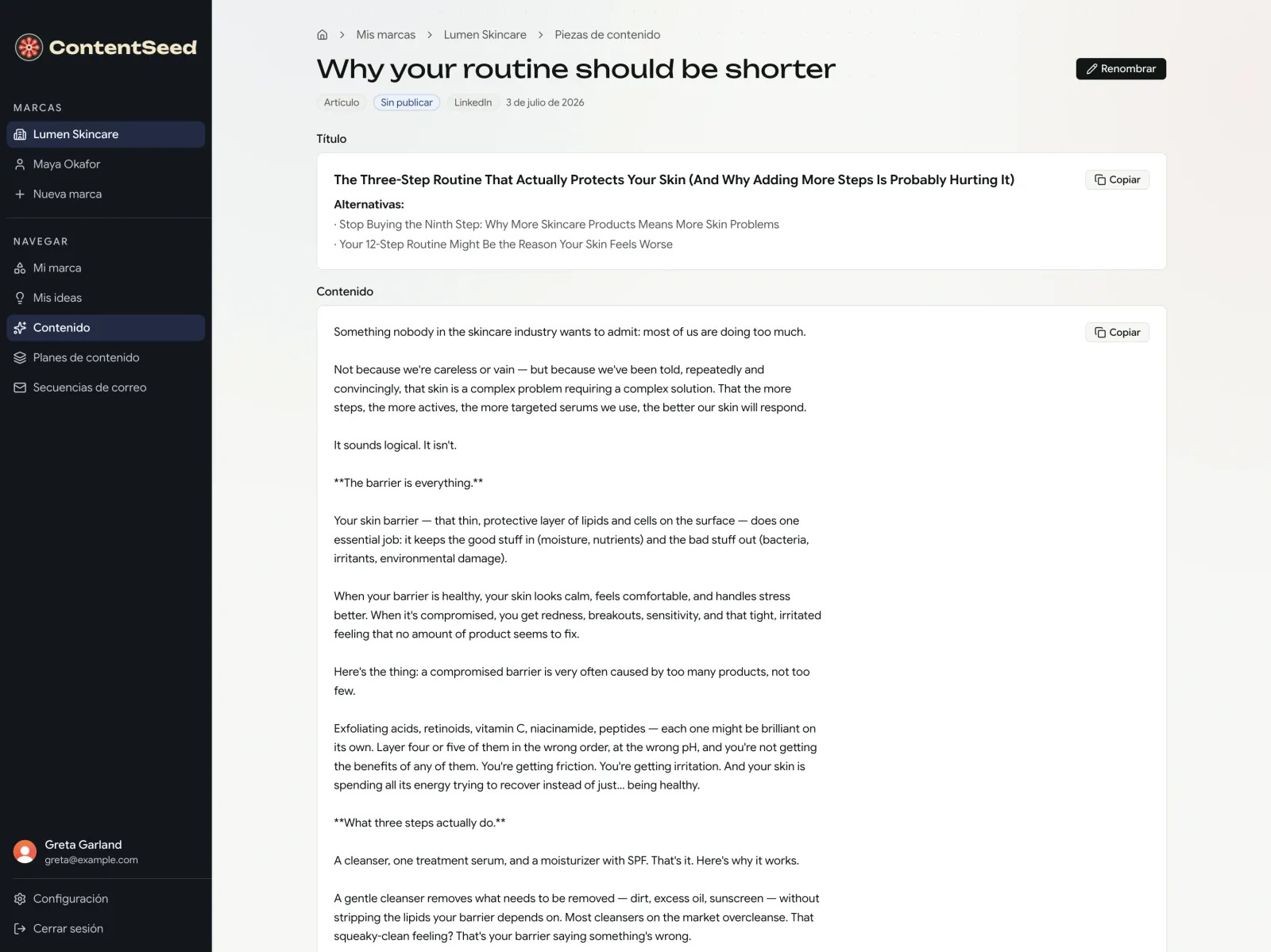
Users answer a concise set of strategic questions about their audience, positioning, and voice. The platform then produces publishable content tailored to the right format, tone, and objective in minutes instead of hours.
Content Seed works in both English and Spanish and is launching globally, so creators and brands can produce on-brand content in their own language wherever they operate.
The moat: encoded marketing strategy
The differentiation isn't the language models themselves. Everyone has access to the same foundational technology.
What Content Seed captures is marketing judgment. Much of the system is built around Melisa's experience developing brand strategy across her own ventures, Tribu Yoga, and client work. That expertise was translated into prompt structures, decision trees, and repeatable frameworks.
The flows are not simply "generate a carousel." They are designed around concepts like audience awareness, educational hook patterns, funnel positioning, and conversion intent. The product guides users through strategic decisions they often don't know they should be making.
Someone using a generic AI chatbot technically has access to the same model we use. What they don't have is the strategic layer embedded into the process itself. That layer is the product.
A deliberate engineering choice
Before Content Seed, most of the systems I built followed the same philosophy: own everything end-to-end and build as much infrastructure internally as possible.
This project was the first time I intentionally reversed that approach.
I adopted third-party services wherever they created meaningful leverage — Resend for email delivery, Clerk for authentication, shadcn/ui for components, and React Router 7 as the framework layer. The tradeoff was deliberate: give up a degree of control in exchange for faster iteration and earlier customer feedback.
That decision reflects a broader shift in how I think about engineering. After more than a decade of building software, I'd rather learn fast than enjoy building every layer myself. I can always write more code — what's genuinely hard to come by is real customer feedback.
The bet
The thesis behind Content Seed is straightforward: people with real expertise shouldn't spend hours every week fighting the mechanics of publishing.
Content pays off over time — it builds an audience, sharpens positioning, and creates leverage. But for a lot of operators, actually producing it is still far more manual than it should be.
If that assumption is correct, Content Seed becomes infrastructure for a category of professionals currently underserved by both generic AI tools and traditional agencies.
Screenshots